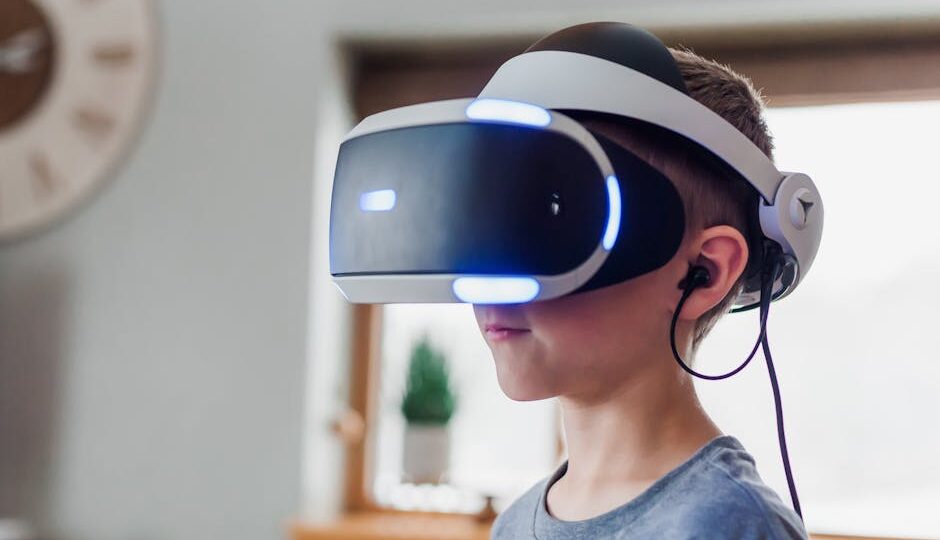
The Expanding Horizons of Virtual Reality
Virtual reality (VR) has long been synonymous with gaming. Since the launch of the Oculus Rift in 2016, the technology has promised gamers immersive experiences, transporting them into fantastical worlds and gripping storylines. Fast forward to 2026, and VR has transcended its gaming origins, weaving itself into various facets of daily life, from education to healthcare. The global VR market is projected to be worth over $80 billion by the end of this year, and less than half of that is related to gaming. The versatility of VR is proving it’s a tool for everyone, not just gamers.
Revolutionizing Education with VR
Imagine studying ancient Rome through the lifelike reconstruction of its bustling streets or conducting a virtual chemistry experiment without worrying about safety hazards. Schools and universities across the globe are integrating VR into their curriculums, providing students with interactive learning experiences. In 2025, a study conducted by the University of California, Berkeley, showed that students who engaged with VR educational tools scored 20% higher on tests compared to those who didn’t. This leap in educational engagement is prompting curriculum designers to rethink traditional teaching methods.
- Enhanced Accessibility: VR offers students with disabilities a chance to participate fully, breaking down physical barriers to learning.
- Global Classrooms: Virtual field trips to places like the Louvre or the Great Barrier Reef are now a reality, broadening students’ horizons without the logistical nightmare of actual travel.
Transforming the Healthcare Industry
Healthcare professionals have embraced VR as a powerful tool for training and patient care. For instance, surgeons at the Cleveland Clinic are using VR simulations to practice complex procedures, enhancing their skills without the risks associated with real-life training. The results are promising—studies show that VR-trained surgeons perform surgeries 30% faster with a significantly higher accuracy rate compared to those trained traditionally.
Moreover, VR is making waves in mental health treatments. Therapists are using virtual environments to treat anxiety disorders, phobias, and PTSD. By exposing patients to controlled virtual scenarios, they can gradually build tolerance and coping mechanisms. In 2024, a report by the American Psychiatric Association highlighted that VR therapy increased treatment success rates by over 40%.
VR in the Business World
Businesses are leveraging VR for everything from product design to customer experiences. Automobile companies, like Tesla, have implemented VR for virtual test drives, allowing potential customers to experience vehicles without stepping into a showroom. The ability to visualize products in a virtual space is revolutionizing retail, too. In 2025, IKEA introduced a VR app that lets users see how furniture will look in their homes, significantly reducing the number of product returns.
- Remote Collaboration: With the rise of remote work, VR is facilitating virtual meetings and collaborative workspaces, offering a sense of presence that video calls can’t match.
- Employee Training: Companies are investing in VR for training modules, providing a safe environment to practice skills, from operating machinery to handling customer service scenarios.
Entertainment Beyond Gaming
While VR gaming remains a thrilling experience, the entertainment industry is discovering new ways to capture audiences’ imaginations. Music concerts and theater productions are being reimagined, offering virtual seats to anyone with a VR headset. The 2025 Coachella festival featured a virtual stage, allowing fans from around the world to enjoy performances as if they were there.
Furthermore, film studios are exploring VR as a medium for storytelling. Interactive VR films offer a participatory experience, transforming viewers from passive observers into active participants. With VR, the boundaries of traditional narrative forms are being pushed, creating an entirely new genre of entertainment.
The Road Ahead for Virtual Reality
As VR technology continues to evolve, its applications will only expand. The development of lighter, wireless headsets and advancements in haptic feedback are making the experience more accessible and immersive. By 2030, experts predict that VR will become as commonplace as smartphones are today, with a presence in almost every industry.
For those considering venturing into the world of VR, it might be worth exploring beyond the gaming realm. Whether you’re an educator, healthcare provider, business owner, or entertainment enthusiast, the potential applications of VR are limited only by imagination. The future is virtual, and it’s here to stay.
So, if you’ve ever wondered whether VR could impact your field of work or hobby, now is the time to explore the possibilities it offers. With technology advancing at lightning speed, virtual reality is not just reshaping gaming but is also redefining the way we live, learn, and interact with the world around us.